


The New 2025 Food Pyramid: Good or Bad?


A few weeks ago, the U.S. Department of Agriculture and the Department of Health and Human Services released the updated federal dietary guidelines for Americans.
This happens every five years.But this year’s update sparked more conversation than usual, largely because of the influence of Robert F. Kennedy Jr. and his outspoken views on nutrition, food systems, and public health.
I recently broke all of this down in depth during a YouTube Live on my channel, answering questions and unpacking what these changes actually mean for your health. If you’re not subscribed yet, make sure you subscribe so you’re notified the next time I go live.
So let’s talk about it here too.
Are the new 2025 food guidelines actually good? Are they still grounded in science? And will they lead to real change, or just sound good on paper?
Overall Changes: Smaller Than They Look
At first glance, the new food pyramid looks dramatically different. It almost feels like an inverted version of the old one.
But when you dig into the actual recommendations, the changes are more subtle than the headlines suggest.
That said, there are some important shifts, especially when it comes to how federally funded food programs operate, including school meals. Some of these changes are encouraging. Others raise red flags.
Let’s go through them one by one.
Mixed Change: “Avoid Processed Foods”
For the first time ever, the federal government officially recommends avoiding or limiting processed foods.
In theory, this is a great step.
Research has shown for years that roughly 95% of Americans overconsume processed carbohydrates, which are strongly linked to weight gain, insulin resistance, and chronic disease.
Historically, the government’s approach has been “everything in moderation,” as long as nutritional targets are technically met. That philosophy allowed federally funded programs to include things like flavored milk, cookies, candy, chips, and ultra-processed snacks in school meals.
Under the new guidelines, that should change.
Here’s the problem.
The guidelines never clearly define what “processed food” actually means.
You and I know what processed food is. But when you’re writing federal policy, vague language creates loopholes. And when loopholes exist, the food industry will use them.
Because there is no strict, legal definition, this change may not lead to meaningful reform in practice.
This should have been a clear win. Instead, it lands somewhere in the middle.
Mixed Change: “Eat More Whole Foods”
Along the same lines, the new guidelines encourage replacing processed foods with whole foods like meat, vegetables, fruits, and whole grains.
Again, this is a principle I talk about constantly. Replacing processed food with whole food is one of the most powerful health upgrades you can make.
But once again, “whole food” is not clearly defined.
Without specific criteria, manufacturers can still stretch the definition and market highly altered foods as “whole.”
The intention is good. The execution is weak.
Good Change: Limit Added Sugar and Sugary Drinks
This is one of the strongest improvements in the new guidelines.
The recommendations now state:
Adults should consume no more than 10 grams of added sugar per meal
Children should consume zero added sugar from birth through age 10
Sugar-sweetened beverages like soda should be avoided
This is excellent policy design.
It’s specific.It’s measurable.And it’s enforceable.
For school meal programs, this means funding is now tied to eliminating added sugars for young children. That is a major win for long-term metabolic health.
On this one, the science, policy, and execution are aligned.
Good Change: Reduce Refined Carbohydrates
Surprisingly, no previous federal guidelines explicitly recommended reducing refined carbohydrates.
Instead, the focus was always on “adding whole grains” rather than removing refined ones.
The new guidelines finally suggest limiting refined carbs altogether.
This is a big deal, and it’s long overdue.
Refined carbohydrates spike blood sugar, drive insulin resistance, and contribute to metabolic dysfunction. Removing them has far more impact than simply adding whole grains on top of an already carb-heavy diet.
This recommendation is also enforceable because refined carbs are clearly defined.
Another solid improvement.
Good Change: Eat More Protein
The new guidelines now recommend 50–100% more protein than before.
Previously, the recommendation was:
0.8 g per kg of body weight
About 54 g per day for a 150-lb person
The updated recommendation is:
1.2–1.6 g per kg
About 81–108 g per day for a 150-lb person
This is a major improvement.
The old recommendation was barely adequate for sedentary individuals and far too low for anyone exercising, aging, or trying to maintain muscle.
Protein is also deeply satiating and plays a critical role in long-term weight loss, metabolic health, and hormone balance.
Most people would feel significantly better eating within this new range.
Mixed Change: Focus on Healthy Fats
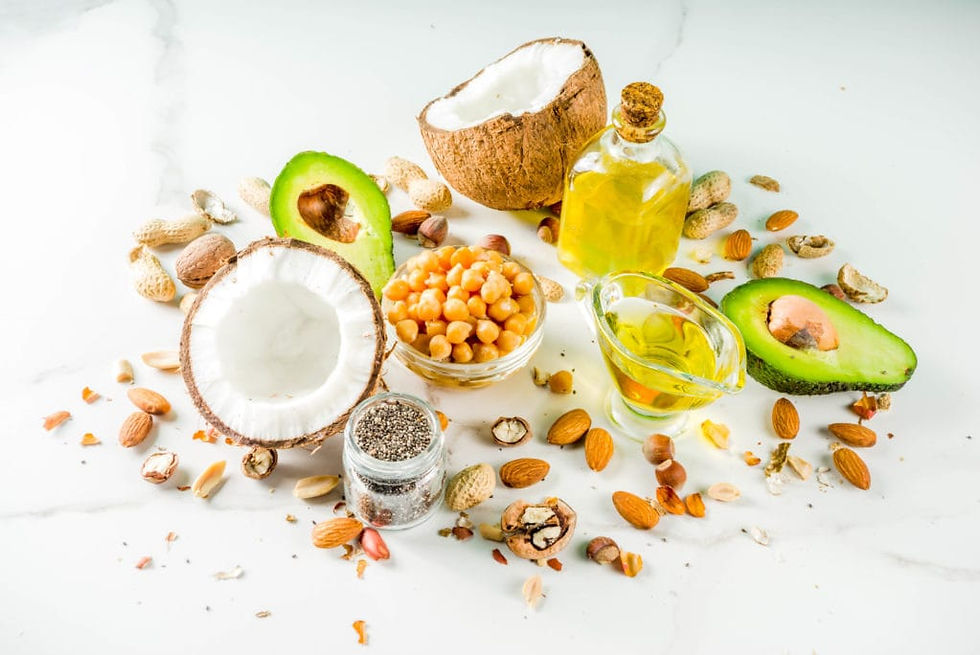
The guidelines now encourage healthy fats from foods like meat, fish, full-fat dairy, avocado, olive oil, and nuts.
This is advice I fully support.
However, the guidelines still cap saturated fat at under 10% of total calories.
That’s where the contradiction appears.
If you eat red meat, full-fat dairy, or animal-based foods, you will exceed that limit quickly.
For individuals, that’s not a problem. For federally funded food programs, it creates a logistical nightmare.
Schools and institutions may struggle to include nutrient-dense animal foods without violating saturated fat limits, even though those foods are some of the most bioavailable sources of protein and fat-soluble vitamins.
Bad Change: Removing Specific Alcohol Limits
This one is puzzling.
For decades, the guidelines specified:
Up to 1 drink per day for women
Up to 2 drinks per day for men
That recommendation was backed by large-scale research showing a clear threshold where risk increases. Alcohol is a classic example of “the dose makes the poison.” Above those limits, long-term health risks rise sharply.
The new guidelines remove specific numbers entirely and replace them with the vague statement:“Consume less alcohol for better health.” This is not helpful. Clarity matters, especially when the research is clear. Removing specific limits weakens public understanding and accountability.
Overall Thoughts
In principle, these guidelines align closely with what I recommend:
Mostly whole foods
Very low sugar
Fewer refined carbs
Adequate protein
Healthy fats
The problem isn’t the message. It’s the lack of precise definitions and enforceable standards.
Older USDA guidelines were flawed nutritionally, but they were written in ways that made them legally enforceable. These new guidelines sound better, but may actually be easier for the food industry to sidestep.
Why This Matters: Malnutrition vs. Environmental Health
Malnutrition is rising in the U.S., particularly among adults over 55. A 2025 study published in Food Science & Nutrition found that from 1999 to 2023, 158,117 Americans over 55 died from malnutrition, with deaths increasing by about 6% per year between 2013 and 2021.
We need better food policy.
But here’s where I remain cautious. While nutrition reform sounds promising, we cannot ignore environmental health.
A 2025 review published in Science found that U.S. air pollution from oil and coal-based power plants contributes annually to:
91,000 deaths
216,000 childhood asthma cases
10,350 preterm births
1,610 cancer cases
According to the American Lung Association, 2025 marked the worst U.S. air quality since 1970, with 46.1% of Americans living in areas with failing air pollution grades.
Food policy matters. Environmental policy matters too. Real health reform requires both.
Final Takeaway
I like many of the ideas behind the new 2025 food pyramid.I just worry they won’t translate into meaningful action. I hope I’m wrong.
We’ll have to watch how these guidelines are implemented, enforced, and interpreted over time.
And if you want to hear my full breakdown, including live Q&A and deeper context, make sure you’re subscribed to my YouTube channel so you don’t miss the next live conversation.
From the bottom of my heart, I hope this helps.


Comments