


Why Fiber and Hormones Are More Connected Than You Think

Updated: Apr 2

Every few months, a new trend takes over the wellness world. Right now it's fiber. You have probably seen it on your feed. Influencers stacking chia seeds, psyllium husk, and veggie-heavy meals, all in the name of fiber-maxxing.
Here is what I want to say to every woman in perimenopause and menopause who sees this trend and wonders if it applies to her: yes. Absolutely yes. But not for the reasons the internet is talking about.
Fiber is not just a digestive support tool. For women navigating hormonal shifts, fiber is one of the most direct levers you can pull to influence how your body manages estrogen. I cover this in depth in Eat Like a Girl — and once you understand the biology, you will never think about fiber the same way again.
The Gut-Hormone Connection Most Doctors Never Mention
Your gut does far more than digest food. It is a hormonal processing center. Inside it lives a vast community of bacteria that collectively perform thousands of functions your body depends on, including the metabolism and clearance of your sex hormones.
Most conversations about hormonal health focus on production. How do I make more progesterone? How do I boost estrogen? But production is only one part of the equation. Once a hormone is produced, your body has to metabolize it — break it down into a usable form — and then clear the excess out. If that clearance process fails, hormones do not just disappear. They recirculate, accumulate, and get stored.
Two organs are responsible for metabolizing your hormones: your liver and your gut. I have written about the liver’s role extensively on this blog and in Eat Like a Girl. Today I want to focus on the gut, and specifically on a collection of bacteria called your estrobolome.
What Is the Estrobolome?
The estrobolome was first defined in 2011 as the aggregate of all enteric bacteria capable of metabolizing estrogen. [1] These bacteria produce specific enzymes, most notably beta-glucuronidase, that deconjugate estrogen from its inactive form back into an active form that can either be used by your cells or cleared through your stool.
Think of it like a sorting system. Your liver processes estrogen and marks it for excretion. Your gut bacteria then determine how much of that marked estrogen actually leaves your body and how much gets reactivated and sent back into circulation. The health and diversity of your estrobolome is the deciding factor.
Research published in Maturitas confirmed that the estrobolome can impact endogenous estrogen metabolism by modulating the enterohepatic circulation of estrogens, directly influencing plasma estrogen levels. [2] In plain terms: your gut bacteria are actively regulating how much estrogen is circulating in your body right now.
When the estrobolome is depleted or imbalanced, two problems can emerge. If beta-glucuronidase activity drops too low, estrogen is not properly reactivated and cleared, contributing to low estrogen symptoms. If it is too high, too much estrogen gets reactivated and recirculates, driving estrogen dominance symptoms like bloating, mood swings, weight gain, and increased cancer risk. [2]

Why Perimenopause and Menopause Change Everything
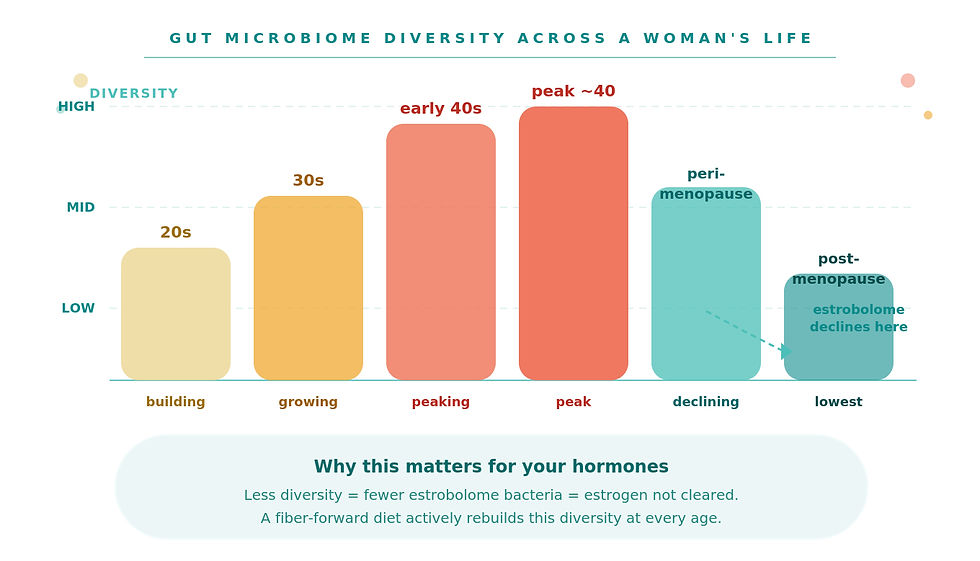
Here is where it gets particularly important for midlife women. Research shows that gut microbiome diversity peaks around age 40 and begins to decline after menopause. [3] The gut microbiome of postmenopausal women shows significantly lower microbial diversity compared to premenopausal women, with a bacterial profile that more closely resembles that of men. [4]
During the perimenopausal period specifically, the relative abundance of beneficial bacteria like Lactobacillus and Bifidobacteria markedly decreases while harmful bacteria like Enterobacter increase. [5] These are precisely the bacteria involved in healthy estrogen metabolism.
The result is a double challenge. Your body is producing less estrogen at the same time the gut system responsible for metabolizing and clearing that estrogen is becoming less efficient. Many women’s symptoms that feel mysterious, including the belly fat that comes out of nowhere, the bloating after ovulation, the mood instability, the brain fog, are partly rooted in this gut-hormone disruption.
As I explain in Eat Like a Girl, your belly fat during menopause is not about eating too much. It is where your body stores excess hormones, specifically cortisol and estrogen, that it cannot metabolize and clear. The gut microbiome is a central part of why that clearance is failing. [6]
Where Fiber Comes In
This is where dietary fiber becomes one of the highest-leverage tools available to you.
A high-fiber dietary regimen has been consistently shown to increase the diversity of your microbiome. [6] More specifically, prebiotic fiber feeds the bacteria that make up your estrobolome. When those bacteria are well-nourished, they perform their hormone-clearing function more effectively.
Fiber also works through a second, more direct mechanism. It physically binds to excess estrogen and xenoestrogens in the gut and promotes their excretion through your stool. [7] This is particularly important given how many estrogen-mimicking compounds women are exposed to through food packaging, personal care products, and environmental pollutants. Getting those compounds out of your body before they can be reabsorbed depends heavily on having adequate fiber in your diet.
Research reviewed in a 2025 publication in Nutrients confirmed that dietary interventions including increased fiber intake, alongside probiotics and prebiotics, show meaningful potential to restore microbial diversity and mitigate menopause-related symptoms through their impact on estrogen regulation. [8]
What Depletes Your Estrobolome
Before we talk about what to eat, it helps to understand what is working against you. The bacteria that make up your estrobolome are vulnerable to several common factors in modern women’s lives:
A highly processed, low-fiber diet
Antibiotics (even past rounds can have lasting effects)
Long-term use of oral contraceptives
Chronic stress
Alcohol
Environmental pollutants and endocrine disruptors
Many women entering perimenopause have spent decades inadvertently depleting these bacteria without knowing how central they are to hormonal health. If this resonates with your history, the good news is that the gut is remarkably resilient. With the right food and fasting strategies, you can begin to rebuild these microbial communities relatively quickly.
Need extra support rebuilding? If your history includes antibiotics, the pill, or years of processed food, rebuilding your estrobolome takes intentional support. I recommend Standard Process whole food gut supplements as a foundation while you do the food work. Their formulations use whole food concentrates your body was designed to recognize.
What to Eat to Support Your Estrobolome
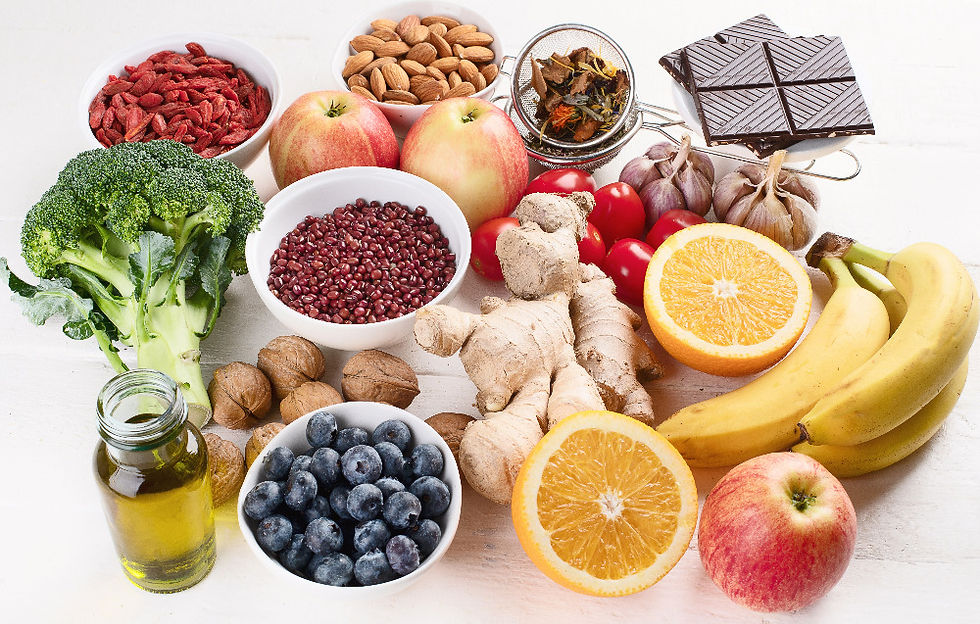
The goal is not to chase one superfood. It is to build variety. A diverse diet feeds a diverse microbiome, and microbiome diversity is directly associated with improved estrogen regulation. [8]
Prebiotic Fiber Sources
These foods feed your existing beneficial bacteria and help them multiply:
Garlic, leeks, and onions
Jerusalem artichoke and jicama
Sweet potatoes, cassava, and other tubers
Legumes including lentils, black beans, and chickpeas
Leafy greens, especially bitter varieties like arugula and dandelion
Probiotic Foods
These add new beneficial bacteria directly into your gut:
Raw, unpasteurized sauerkraut and kimchi
Kefir
Yogurt with live and active cultures
Miso and tempeh
Polyphenol-Rich Foods
Polyphenols are plant compounds that nourish your gut microbes and act as antioxidants. They are found in:
Berries, especially blueberries and aronia berries
Green tea
Raw cacao
Flaxseed and pumpkin seeds
Beets and colorful vegetables
I call these the three Ps, probiotics, prebiotics, and polyphenols, and they form the foundation of eating to support your hormonal health at every stage of life. [6]
Fasting and Fiber: A Powerful Combination
One thing most fiber conversations do not address is how fasting and fiber work together for menopausal women. Research shows that a 24-hour fast can stimulate the production of intestinal stem cells, the cells responsible for repairing the inner terrain of your gut. [6] When you break that fast with fiber-rich, probiotic, and polyphenol foods, you are essentially rebuilding your gut microbiome on a freshly repaired foundation.
This is why the way you break your fast matters as much as the fast itself. A gut reset fast followed by bone broth and then a fiber-forward meal is one of the most effective strategies I have found for helping women in menopause repair a depleted estrobolome.

When Food Is Not Enough
For many women entering perimenopause, the gut has already sustained significant damage. Rounds of antibiotics, time on the pill, chronic stress, decades of processed food — each erodes the microbial diversity that estrogen metabolism depends on.
In these cases, a fiber-forward diet is essential, but rebuilding may take longer than you want to wait. This is where targeted whole food nutritional support can help close the gap.
I have been recommending Standard Process gut support supplements to women in my community who need an additional foundation while their gut rebuilds. What I trust about their formulations is that they use whole food concentrates — not synthetic isolates — which means your body recognizes and utilizes the nutrients the way it was designed to.
This is not about replacing the food work. It is about supporting it while your microbiome gets back to full strength.
Your Body Is Not Broken
The symptoms that come with perimenopause and menopause are real. The belly fat, the mood swings, the bloating, the brain fog. But they are not signs that your body has failed you. They are signals that your body needs different support than it did before.
Understanding the estrobolome and the role fiber plays in keeping it healthy is one of the most empowering pieces of biology I can share with you. Because it means that something as simple as what you eat for lunch today can meaningfully shift your hormonal environment.
Start with one big green salad at every meal. Add a serving of legumes. Swap a processed snack for a fermented food. These are not dramatic interventions. They are the daily signals that tell your body it is supported.
References
[1] Plottel, C.S. & Blaser, M.J. (2011). Microbiome and malignancy. Cell Host Microbe, 10(4), 324-335.
[2] Baker, J.M., Al-Nakkash, L., & Herbst-Kralovetz, M.M. (2017). Estrogen-gut microbiome axis: Physiological and clinical implications. Maturitas, 103, 45-53.
[3] Diversity of the gut microbiome peaks around age 40. Source: News Medical / Menopause and the Microbiome.
[4] Wang, H. et al. (2025). Gut microbiota has the potential to improve health of menopausal women by regulating estrogen. Frontiers in Endocrinology, 16, 1562332.
[5] Frontiers in Endocrinology (2025). Perimenopausal changes in Lactobacillus and Bifidobacteria abundance. Ibid.
[6] Pelz, M. (2024). Eat Like a Girl. Hay House. pp. 22-28, 85-87.
[7] Pelz, M. (2025). Age Like a Girl. Hay House. pp. 107-109. Fiber binds to excess estrogen and xenoestrogens, promoting excretion via stool.
[8] Diet, the Gut Microbiome, and Estrogen Physiology: A Review in Menopausal Health and Interventions. Nutrients (2025), 18(7), 1052.


Im 73 and just had my first hot flash after dr adjusting bp meds he told me I would need to see a gynecologist to get meds for hot flash I told him there is no way I'm taking hormones at this stage of life.
I also stopped rybelsus on my own.
I only have one ovary had hysterectomy many years ago.
After 6 months of these adjustments I believe my gut is happy with the changes made. My new family crnp was surprised I took upon myself to do this, her only addition was more fiber and I was already in the process of that. I like your added information, podcasts,. Thank you
Since Estrobolome is even lower in postmenopause besides eating what you recommend for other two stages what else can we do. I am 75 and finding my stools are much looser.
do you you do this for men